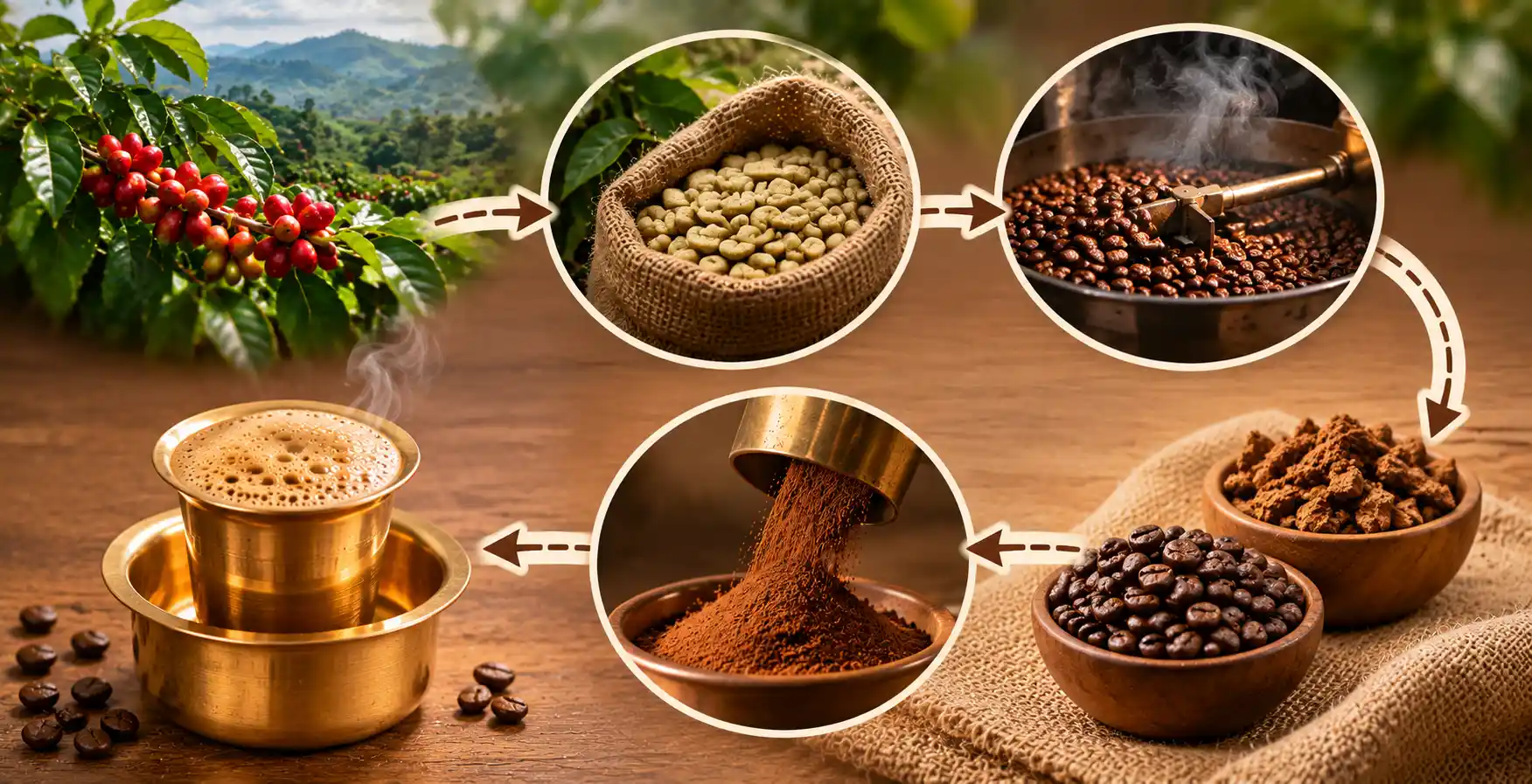
A cup of filter coffee takes about 20 minutes to brew. The powder that goes into it takes months to make. It starts as a cherry on a coffee plant in the hills of Karnataka, and passes through picking, drying, roasting, blending and grinding before it reaches your filter.
Here's how that journey works, and what we do at each step to keep your kaapi tasting the way it should.
Filter coffee powder is made by roasting Arabica and Robusta coffee beans, grinding them fine enough for a South Indian filter, and often blending them with roasted chicory. Freshness after roasting makes the biggest difference to taste.
1. Growing: coffee in the hills of Chikkamagaluru
India's coffee story began in Chikkamagaluru, Karnataka, and it's still one of the country's best-known coffee regions. That's where the beans in Namma Coffee come from.
Coffee in this region usually grows on hill slopes, often under the shade of taller trees. The cool climate and shade let the coffee cherries ripen slowly, which helps the beans develop more flavour.
Two types of coffee grow here, and both go into filter coffee:
- Arabica: grown at higher altitudes. It has more aroma and a smoother, slightly fruity taste.
- Robusta: a hardier plant. It gives strength, body and the strong coffee "kick" that stands up to milk.
For Namma Coffee, we blend Plantation A (a grade of washed Arabica), Peaberry (small, round single-seed beans) and Robusta.
2. Harvesting: picking the coffee cherries
Coffee beans are the seeds inside a red fruit called a coffee cherry. In South India, the harvest usually runs from about November to February, and on most estates the ripe cherries are picked by hand.
Picking ripe cherries matters. Unripe cherries make the coffee taste sour and thin, while ripe ones give a sweeter, fuller cup.
3. Processing and drying
After picking, the beans have to be separated from the fruit and dried. There are two common ways:
- Washed: the fruit is removed with water first, then the beans are dried. This gives a cleaner, brighter taste.
- Natural (sun-dried): the whole cherry is dried in the sun before the beans are taken out. This gives a heavier, fruitier taste.
Once dried, the beans are hulled and sorted. These raw beans are called green coffee, and they can be stored for months before roasting.
4. Roasting: where the flavour comes from
Green coffee has almost no coffee aroma. The familiar smell and taste only appear when the beans are roasted.
For South Indian filter coffee, we medium-roast the beans in small batches. A medium roast gives the decoction a rich colour and body without the burnt bitterness of a very dark roast. Roasting in small batches makes it easier to keep every batch even.
5. Blending with chicory
Many filter coffee powders are blended with chicory, a roasted root. Chicory makes the decoction darker and thicker, and softens the bitterness when you add milk.
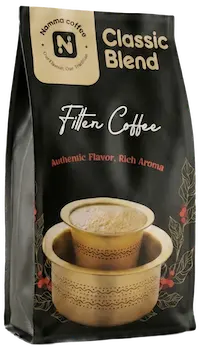
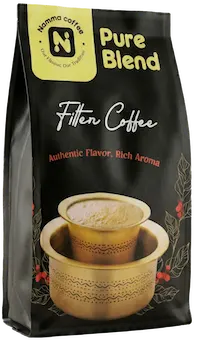
We make six blends, from 100% coffee with no chicory up to 50:50 coffee and chicory. The most popular is the 80:20 Classic Blend, the balance most people know as the traditional taste. Our coffee-chicory ratio guide explains how each one tastes, or you can compare them on our shop page.
6. Grinding for the filter
Grind size matters more than most people think:
- Too coarse: water runs through too fast, giving a weak, thin decoction.
- Too fine: the powder blocks the holes in the filter, so the decoction drips very slowly and can taste bitter.
Filter coffee powder is ground fine, but not as fine as espresso, so the water passes through slowly and evenly.
7. Packing and freshness
Roasted coffee starts to lose its aroma once it's ground. That's why we roast, pack and dispatch every batch within 24 hours, so the powder reaches you as fresh as possible.
To keep your filter coffee powder fresh at home:
- store it in an airtight container
- keep it away from heat, sunlight and moisture
- don't keep it in the fridge, where it can absorb moisture and smells
- use it within a few weeks of opening for the best taste
8. Brewing: the last step is yours
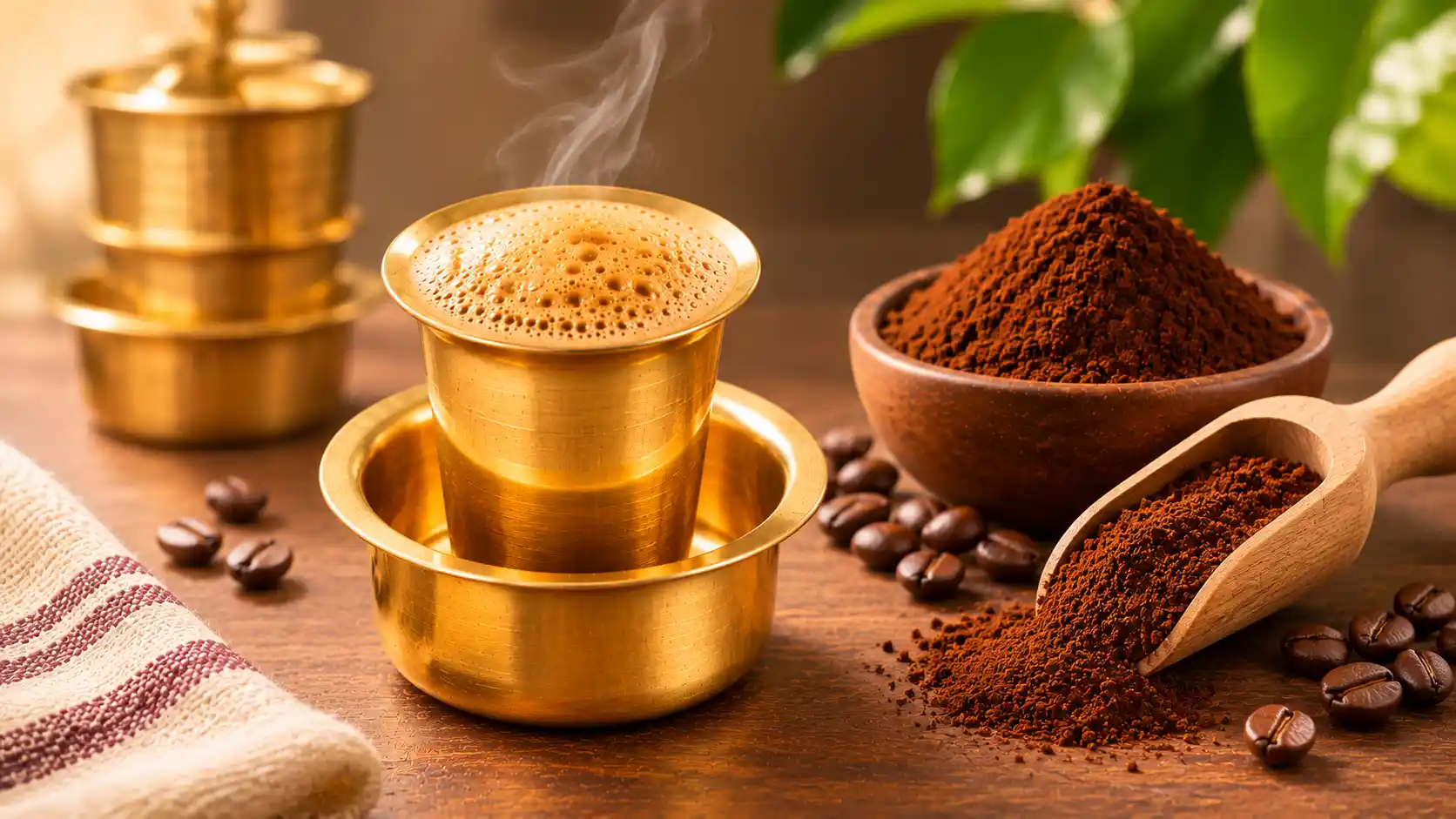
The final step happens in your kitchen. Add the powder to the top of your filter, pour in hot water, and let the decoction drip for 15–20 minutes. Then mix it with hot milk and sugar, and pour it between the tumbler and davara until it's frothy.
For full instructions, see how to make South Indian filter coffee.
Frequently asked questions
Which coffee beans are used for South Indian filter coffee?
Most filter coffee is made from a mix of Arabica and Robusta beans. Arabica gives aroma and smoothness, and Robusta gives strength and body.
Why is chicory added to filter coffee powder?
Chicory makes the decoction darker and thicker, and gives a smoother, slightly bittersweet taste with milk. It's traditional, but optional.
How long does filter coffee powder stay fresh?
It tastes best within a few weeks of opening. Keep it in an airtight container away from heat and moisture.
Can I use filter coffee powder in a coffee machine?
It's ground for the South Indian filter, so it works best there. It can be used in a French press or pour-over, but the cup will usually be lighter.
Now that you know what goes into every pack, taste the difference for yourself. Try the Classic Blend for the traditional 80:20 taste, or the Pure Blend for 100% coffee with no chicory.