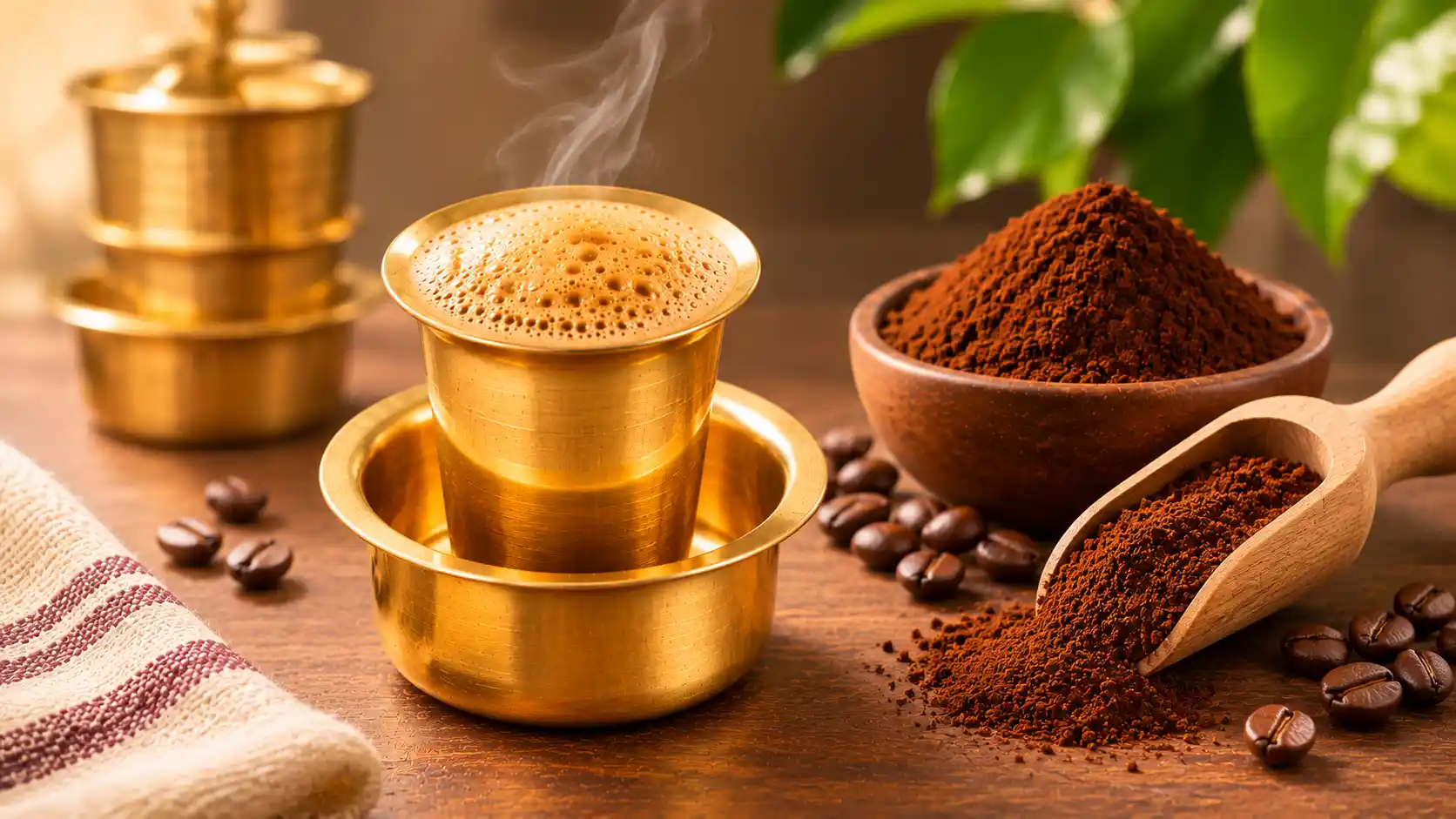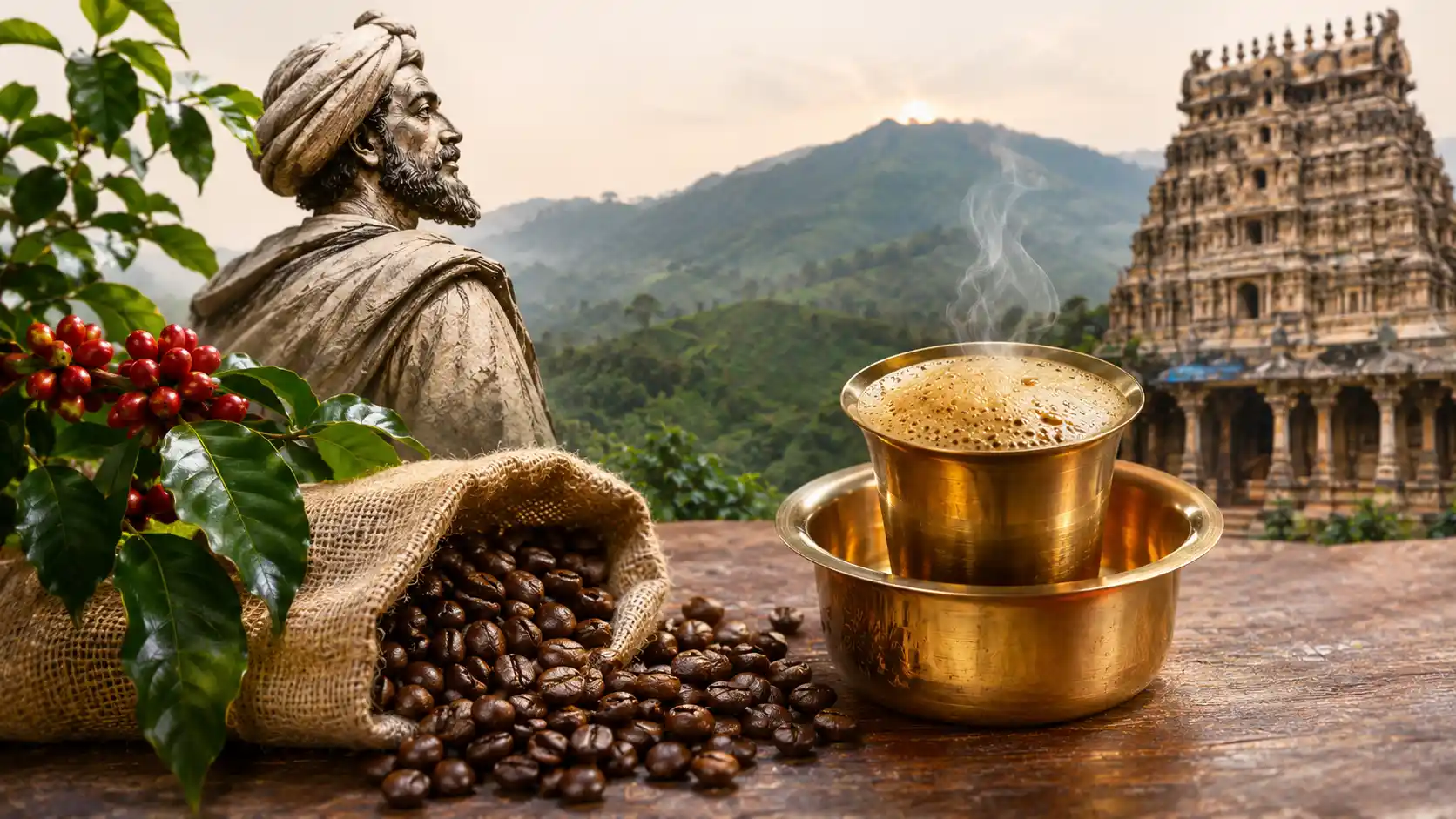
Few drinks are as tied to South Indian homes as filter coffee. The ringing of a steel tumbler, the smell of fresh decoction and the long pour that builds the froth are part of every morning in Tamil Nadu, Karnataka, Kerala and Andhra Pradesh. But coffee wasn't always here. Its story in India starts with seven seeds and a pilgrim from Karnataka.
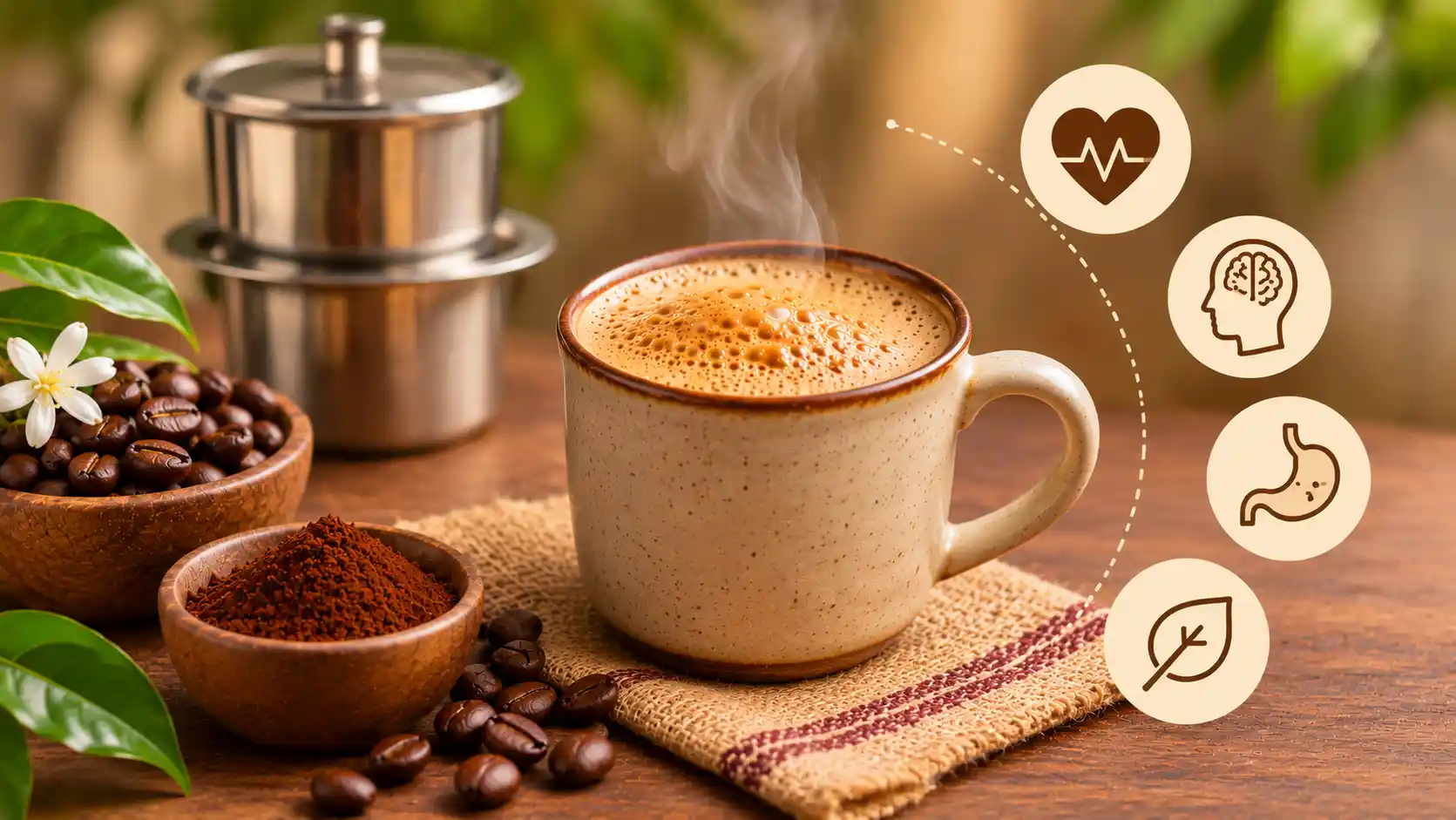
South Indian filter coffee is a strong coffee decoction, slowly dripped through a metal filter and mixed with hot milk and sugar. It's often made with a coffee-chicory blend and served frothy in a tumbler and davara.
Baba Budan and the seven coffee seeds (1600s)
In the 17th century, coffee was a closely guarded crop in Yemen. Exporting fertile seeds was forbidden, so the beans that left the port of Mocha were roasted or boiled first.
The story goes that a Sufi saint called Baba Budan, returning from his pilgrimage to Mecca, hid seven raw coffee seeds and carried them back to India. Seven was a sacred number, so the smuggling was also seen as an act of faith. Popular accounts date this to around 1670.
He planted the seeds in the hills near Chikkamagaluru, in Karnataka. The range is now named after him: Baba Budangiri. Those first plants are often called the beginning of coffee in India, and Chikkamagaluru is still one of the country's most important coffee regions today. It's also where the beans in Namma Coffee come from.
From hillside gardens to plantations (1800s)
For a long time, coffee grew mainly in small gardens. That changed in the 19th century, when the British set up commercial coffee plantations across the hills of Karnataka, Kerala and Tamil Nadu.
Most of the crop was grown for export, but coffee slowly found its way into local markets and kitchens. Over the following decades it moved from estates into towns and then into homes, especially across Tamil Nadu and Karnataka.
How "kaapi" became a daily ritual (early 1900s)
By the early 20th century, coffee had become part of everyday life in many South Indian households. In Tamil it became kaapi, and serving it to guests turned into a sign of hospitality.
Coffee houses and small restaurants helped it spread further. Neighbourhood cafés and hotels across South India served filter coffee alongside idli and dosa, and that pairing is still a breakfast favourite. Some towns built their own reputations. Kumbakonam degree coffee, known for its thick, strong decoction and fresh milk, is one of the most famous.
Why chicory is added to filter coffee
Many South Indian filter coffee blends mix ground coffee with chicory, a roasted root. Chicory gives a darker colour, a fuller body and a slightly bittersweet taste that stands up well to milk. It also made coffee go further when beans were expensive.
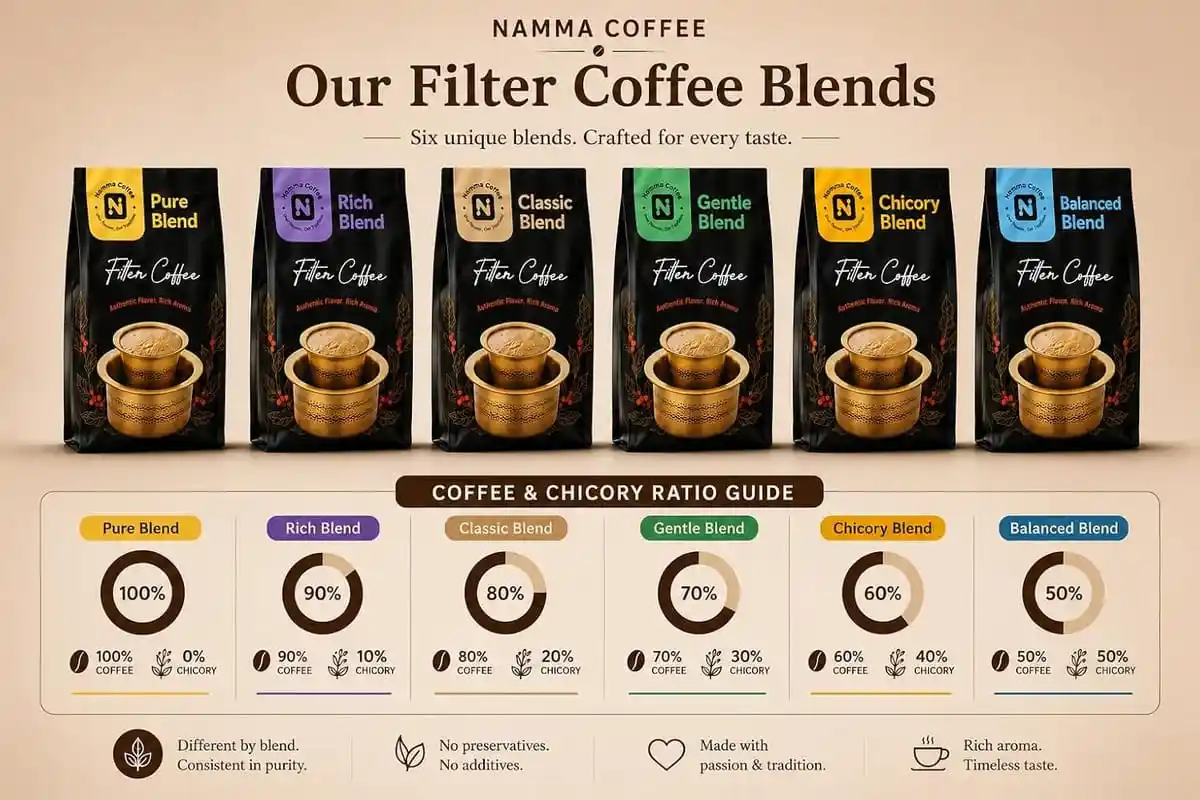
How much chicory to add is a matter of family taste. Some people prefer 100% coffee for a clean, bold cup. Others grew up with 80:20 or even 50:50 blends. If you're not sure which you'd like, our coffee-chicory ratio guide explains how each ratio tastes.
What makes South Indian filter coffee different
South Indian filter coffee isn't brewed like espresso or a pour-over. What makes it different is the method.
- The filter: a two-part steel or brass filter. Ground coffee goes into the top chamber, hot water is poured over it, and the decoction drips slowly into the bottom chamber.
- The decoction: the coffee drips for 15–20 minutes, giving a thick, strong concentrate.
- The milk: the decoction is mixed with hot, full-cream milk and sugar, usually about one part decoction to three parts milk.
- The pour: the coffee is poured back and forth between the tumbler and davara (also called a dabara) to cool it and build a light froth.
Freshly roasted, freshly ground coffee makes the biggest difference. For the full method, see how to make South Indian filter coffee. The decoction tastes richer and smells stronger when the powder hasn't been sitting on a shelf for months.
Filter coffee today
Filter coffee has travelled far beyond South India. You'll find it in cafés in Mumbai and Delhi, in airport kiosks and in Indian homes around the world. Yet the best cup is still the one made at home, with a filter on the stove top and a tumbler ready by the side.
That's why we started Namma Coffee: to bring freshly roasted, traditionally made filter coffee powder from Chikkamagaluru beans to your kitchen, packed and dispatched within 24 hours of roasting.
Frequently asked questions
Who brought coffee to India?
According to popular tradition, the Sufi saint Baba Budan brought seven coffee seeds from Yemen in the 17th century and planted them in the hills near Chikkamagaluru, Karnataka.
Where did South Indian filter coffee originate?
Coffee was first grown in Karnataka, but filter coffee as a daily drink became popular across Tamil Nadu, Karnataka, Kerala and Andhra Pradesh in the early 20th century.
Why is it called "kaapi"?
Kaapi is the Tamil pronunciation of "coffee". It's now widely used across South India for filter coffee made with milk.
Does filter coffee have to contain chicory?
No. Chicory is traditional but optional. Pure coffee gives a cleaner, bolder taste, while coffee-chicory blends taste fuller and darker with milk.
Want to taste the tradition for yourself? Start with our Classic Blend (80% coffee, 20% chicory), the most familiar South Indian taste, or try the Pure Blend if you like your kaapi without chicory.