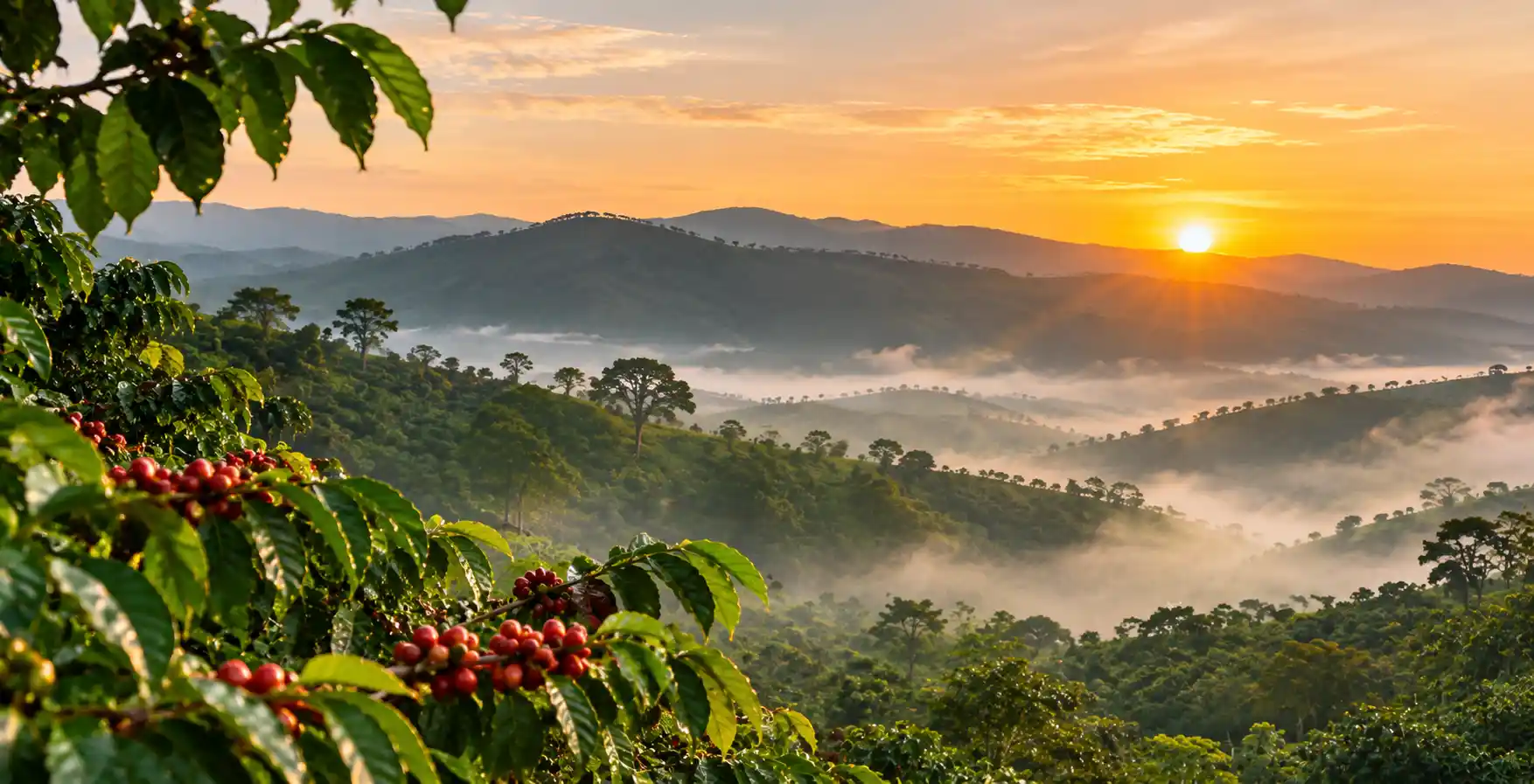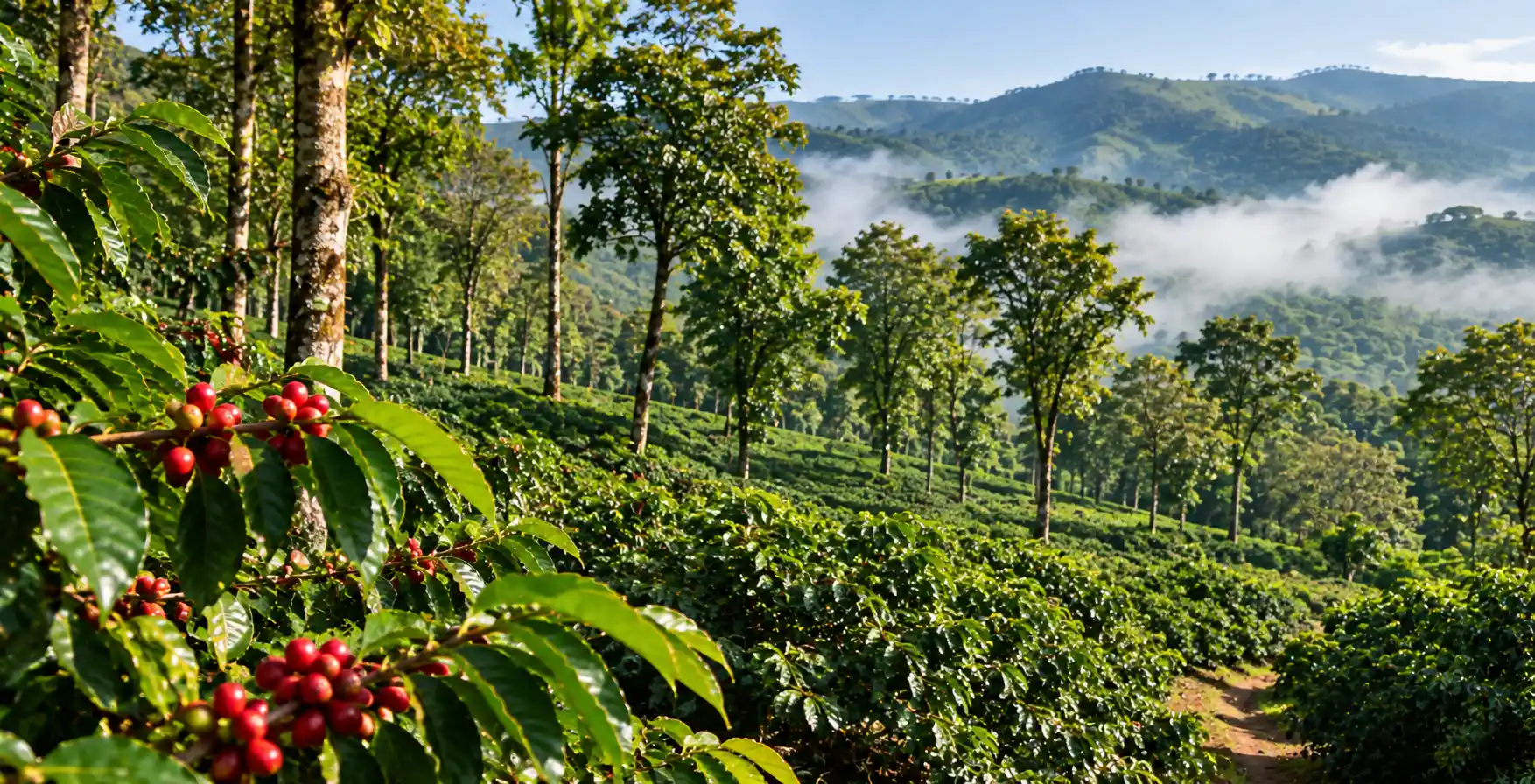
Most of India's coffee comes from a handful of hill districts in the Western Ghats. Just three of them, Kodagu, Chikkamagaluru and Wayanad, produced about 78% of India's coffee in 2023-24.
Here's a district-by-district look at where India's Arabica and Robusta grow, using the latest figures from the Coffee Board of India. For the state-by-state picture, see India's coffee regions.
Kodagu (Coorg) in Karnataka is India's largest coffee-producing district, with about 1.33 lakh tonnes in 2023-24, or 37% of the country's coffee. Chikkamagaluru is second and Wayanad in Kerala is third.
India's top coffee-producing districts
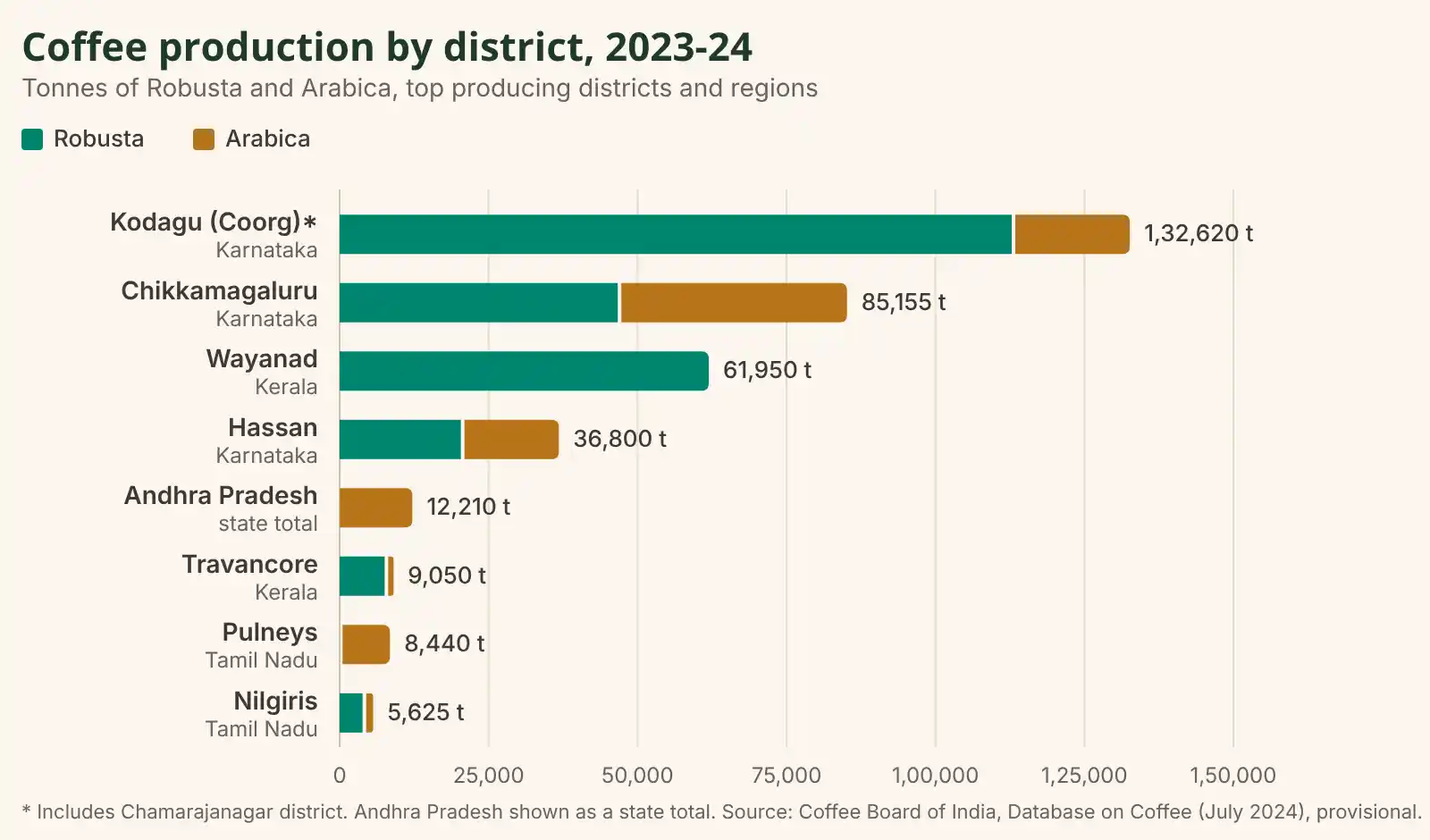
Coffee production by district and region, 2023-24 (provisional). Source: Coffee Board of India.
| Rank | District / region | State | Production (tonnes) | Share of India | Mostly |
|---|---|---|---|---|---|
| 1 | Kodagu (Coorg)* | Karnataka | 1,32,620 | 36.8% | Robusta |
| 2 | Chikkamagaluru | Karnataka | 85,155 | 23.6% | Robusta and Arabica |
| 3 | Wayanad | Kerala | 61,950 | 17.2% | Robusta |
| 4 | Hassan | Karnataka | 36,800 | 10.2% | Robusta and Arabica |
| 5 | Travancore | Kerala | 9,050 | 2.5% | Robusta |
| 6 | Pulneys | Tamil Nadu | 8,440 | 2.3% | Arabica |
| 7 | Nilgiris | Tamil Nadu | 5,625 | 1.6% | Robusta |
*Kodagu's production figure includes Chamarajanagar district. Andhra Pradesh produced 12,210 tonnes in 2023-24, but the Coffee Board doesn't split its production by district.
Karnataka: India's coffee heartland
Karnataka grows coffee on 2,48,942 hectares and produced 70.6% of India's coffee in 2023-24. Almost all of it comes from three districts.
| District | Arabica (ha) | Robusta (ha) | Total (ha) | Production (t) |
|---|---|---|---|---|
| Kodagu | 27,838 | 79,883 | 1,07,721 | 1,32,620* |
| Chikkamagaluru | 52,743 | 46,857 | 99,600 | 85,155 |
| Hassan | 24,638 | 16,983 | 41,621 | 36,800 |
| Karnataka | 1,05,219 | 1,43,723 | 2,48,942 | 2,54,575 |
*Includes Chamarajanagar district.
Kodagu (Coorg)
Kodagu is India's biggest coffee district by both area and production. About three-quarters of its coffee land is Robusta. Kodagu has two coffee zones:
- Madikeri: 55,126 hectares, with a mix of Arabica and Robusta
- Virajpet: 52,595 hectares, almost entirely Robusta
Chikkamagaluru
Chikkamagaluru is where coffee first grew in India, when Baba Budan is said to have planted seven seeds in its hills in the 17th century. Today it's the largest Arabica district in Karnataka, with 52,743 hectares of Arabica alongside 46,857 hectares of Robusta. It produced 85,155 tonnes in 2023-24.
The beans in Namma Coffee come from Chikkamagaluru.
Hassan
Hassan has 41,621 hectares of coffee, and more of it is Arabica (59%) than Robusta. Its plantations sit on the edge of the Western Ghats, next to Chikkamagaluru and Kodagu.
Kerala: Wayanad and the Robusta belt
Kerala has 85,957 hectares of coffee, and about 95% of it is Robusta.
| Region | Arabica (ha) | Robusta (ha) | Total (ha) | Production (t) |
|---|---|---|---|---|
| Wayanad | 0 | 67,738 | 67,738 | 61,950 |
| Travancore | 2,153 | 11,131 | 13,284 | 9,050 |
| Nelliampathy | 2,085 | 2,850 | 4,935 | 2,750 |
| Kerala | 4,238 | 81,719 | 85,957 | 73,750 |
- Wayanad: India's third-biggest coffee district and grows only Robusta. It produced 61,950 tonnes in 2023-24, more than all of Tamil Nadu, Andhra Pradesh and Odisha combined.
- Travancore: covers the coffee areas of southern Kerala, mostly Robusta.
- Nelliampathy: a small hill region in Palakkad district that grows both types.
Tamil Nadu: hill-grown Arabica
Tamil Nadu has 35,914 hectares of coffee, and 83% of it is Arabica, grown in its high hill ranges.
| Region | Arabica (ha) | Robusta (ha) | Total (ha) | Production (t) |
|---|---|---|---|---|
| Pulneys & Bodi | 16,312 | 882 | 17,194 | 8,440 |
| Nilgiris | 3,805 | 4,900 | 8,705 | 5,625 |
| Shevaroys (incl. Kolli Hills) | 7,255 | 60 | 7,315 | 3,925 |
| Anamalais (Coimbatore) | 2,270 | 430 | 2,700 | 1,350 |
| Tamil Nadu | 29,642 | 6,272 | 35,914 | 19,340 |
In its production table, the Coffee Board lists these regions as Pulneys and Shevaroy (Salem).
- Pulneys (Palani Hills) & Bodi: Tamil Nadu's largest coffee region, almost all Arabica.
- Nilgiris: the only Tamil Nadu region where Robusta covers more land than Arabica.
- Shevaroys (Yercaud) and Kolli Hills: almost entirely Arabica.
- Anamalais: a small region near Coimbatore.
Andhra Pradesh, Odisha and the North East
Outside the traditional states, coffee is growing fastest in the Eastern Ghats.
- Andhra Pradesh: 1,07,363 hectares, almost all Arabica, across Minumuluru (46,089 ha), Chintapalli (42,104 ha) and the Araku Valley (19,169 ha). That's more Arabica land than Karnataka, but production is still low, at 12,210 tonnes, because many plantations are young.
- Odisha: about 5,350 hectares and 465 tonnes.
- North East: 6,092 hectares across seven states, led by Nagaland, Mizoram and Meghalaya.
Why this matters for your filter coffee
Most South Indian filter coffee uses both Arabica and Robusta. Districts like Chikkamagaluru and Hassan, which grow plenty of both, are well suited to filter coffee blends: Arabica for aroma, Robusta for the strength and body that hold up to milk.
That's why Namma Coffee uses Plantation A, Peaberry and Robusta beans from Chikkamagaluru, medium-roasted in small batches and ground for the South Indian filter.
Frequently asked questions
Which district produces the most coffee in India?
Kodagu (Coorg) in Karnataka. It produced 1,32,620 tonnes in 2023-24 (including Chamarajanagar), about 37% of India's coffee.
Which district grows the most Arabica in India?
Chikkamagaluru has the most Arabica of any district in the traditional coffee states, with 52,743 hectares. In Andhra Pradesh, the Minumuluru and Chintapalli areas each have over 40,000 hectares of Arabica.
Is Wayanad coffee Arabica or Robusta?
Robusta. All of Wayanad's 67,738 hectares of coffee are Robusta.
Where is coffee grown in Tamil Nadu?
In the Pulneys (Palani Hills) and Bodi, the Nilgiris, the Shevaroys (Yercaud) and Kolli Hills, and the Anamalais near Coimbatore.
Figures are for 2023-24 (provisional) from the Coffee Board of India's Database on Coffee (July 2024), Tables 1.3, 1.5 and 1.8.
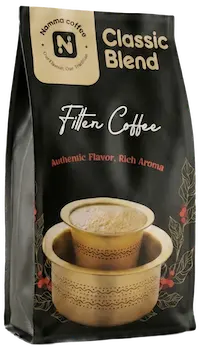
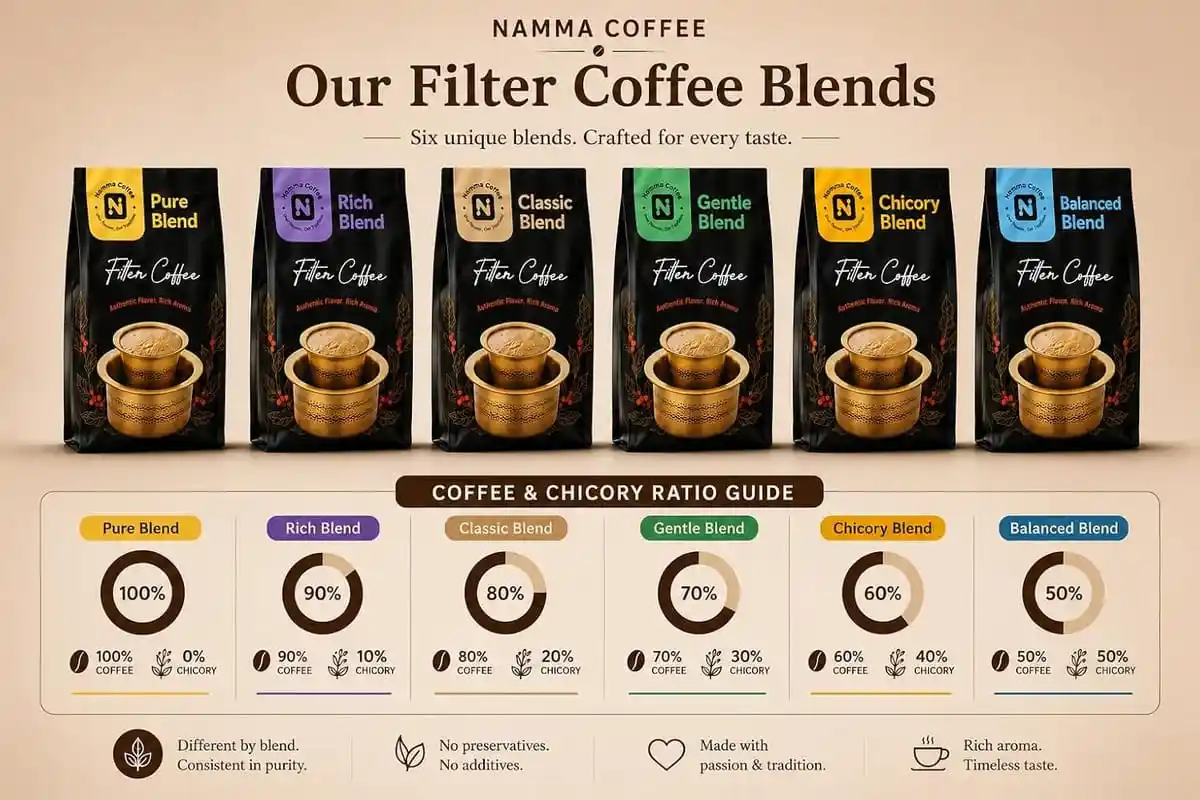
Taste coffee from Chikkamagaluru, where India's coffee story began. Try the Classic Blend (80:20 coffee-chicory) or the Pure Blend (100% coffee).