Instant coffee takes a few seconds. Filter coffee takes about 20 minutes. So is filter coffee really worth the wait? For most South Indian coffee drinkers the answer is an easy yes, but it helps to know what actually makes the two so different.
Here's how filter coffee and instant coffee are made, how they compare side by side, and when each one makes sense.
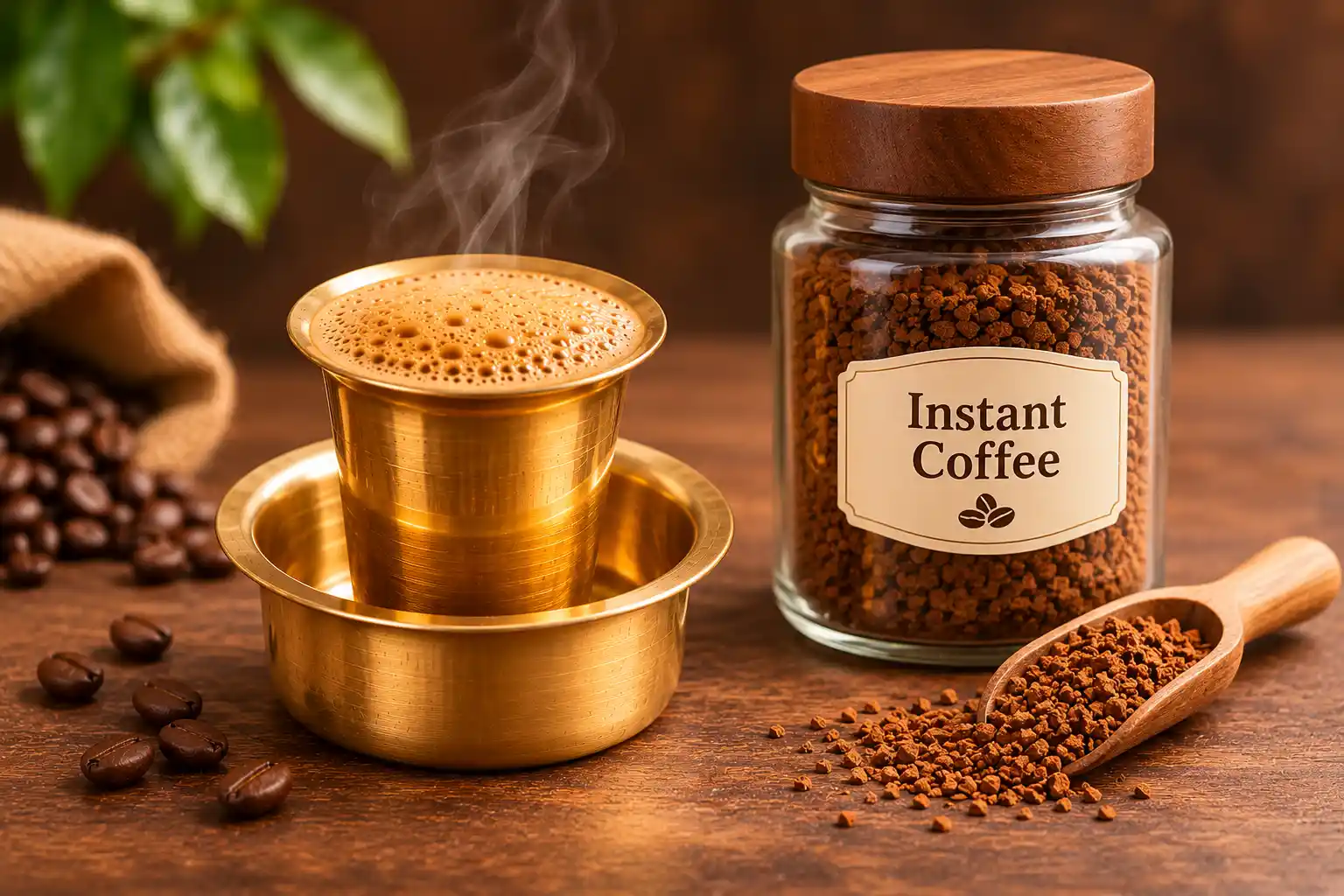
Filter coffee is brewed fresh from ground coffee, usually with chicory, by letting hot water drip slowly through a metal filter. Instant coffee is coffee that's already been brewed and dried into granules or powder. Filter coffee has more aroma and body. Instant coffee is faster and more convenient.
What is filter coffee?
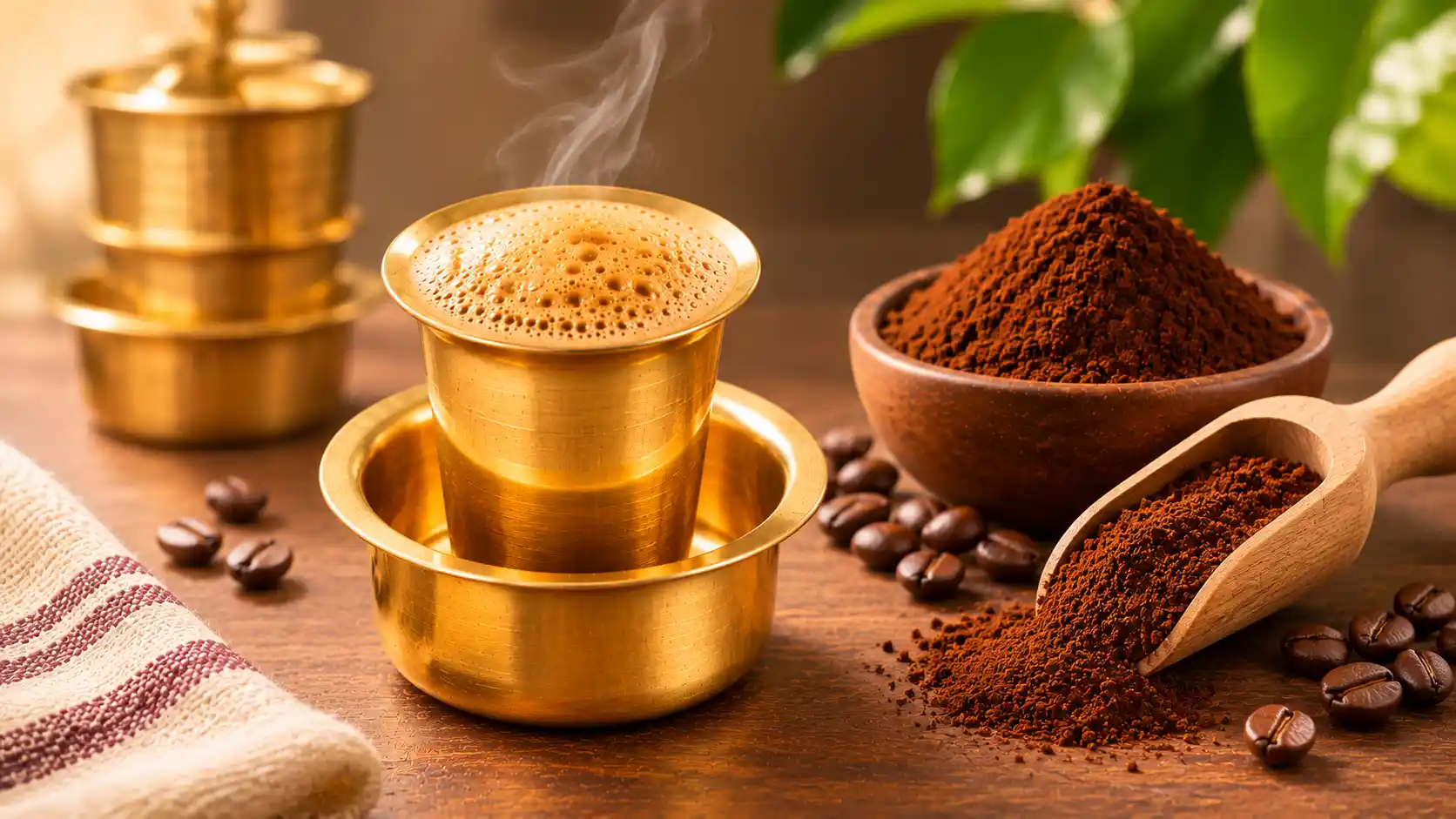
South Indian filter coffee is made from roasted, ground coffee, often blended with roasted chicory. You put the powder in the top chamber of a metal filter, pour boiling water over it, and let the decoction drip slowly into the chamber below for 15–20 minutes. The decoction is then mixed with hot milk and sugar and frothed between a tumbler and davara.
Because you brew it fresh, you get the coffee's aroma and oils straight into the cup. A metal filter doesn't trap oils the way a paper filter does, which is part of why filter coffee tastes so full-bodied.
New to it? Our step-by-step filter coffee guide takes you through it.
What is instant coffee?
Instant coffee is coffee that's been brewed in a factory and then dried. There are two main ways:
- Spray-drying: the brewed coffee is sprayed into hot air, which turns it into a fine powder.
- Freeze-drying: the brewed coffee is frozen and the water is removed under a vacuum, leaving granules.
At home, you just add hot water or milk and it dissolves. Instant coffee is usually made from Robusta beans, and much of the coffee's aroma is lost during brewing and drying. In India, many instant coffees are also coffee-chicory mixtures, so check the label.
Filter coffee vs instant coffee: side by side
| Filter coffee | Instant coffee | |
|---|---|---|
| Made from | Freshly roasted, ground coffee (often with chicory) | Coffee brewed and dried in a factory |
| How you make it | Brewed in a filter, 15–20 minutes | Stirred into hot water or milk, seconds |
| Aroma | Strong, fresh coffee aroma | Mild, much of it lost in processing |
| Taste and body | Rich, full-bodied, smooth | Thinner, can taste flat or harsh |
| Beans | Usually Arabica and Robusta | Usually Robusta |
| Strength | You control it with the powder, chicory ratio and milk | Fixed by the product, adjusted only by how much you use |
| Caffeine | Usually more per cup, less with more chicory | Usually less per cup |
| Ingredients | Coffee, or coffee and chicory | Coffee (premixes may add sugar, milk solids or creamer) |
| Waste | Reusable filter; grounds can be composted | Sachets and jars |
| Best for | Daily coffee at home, the traditional taste | Travel, office, when you're in a hurry |
Why filter coffee tastes better
1. Freshness and aroma
Coffee's aroma comes from delicate compounds that fade quickly once coffee is brewed. Filter coffee keeps them because you brew it fresh just before drinking. Instant coffee is brewed, concentrated and dried long before it reaches you, so much of that aroma is gone.
2. Body and richness
The slow drip through a metal filter produces a thick decoction that carries the coffee's oils. Mixed with hot milk, it gives a creamy, full-bodied cup. Instant coffee dissolves completely, which makes it convenient, but the result is usually thinner.
3. Better beans
Filter coffee blends often use a mix of Arabica for aroma and smoothness and Robusta for strength. Namma Coffee blends Plantation A, Peaberry and Robusta beans from Chikkamagaluru, medium-roasted in small batches. Most instant coffee relies mainly on Robusta.
4. You choose the strength
With filter coffee, you can change:
- the blend: from 100% coffee to 50:50 coffee and chicory
- the amount of powder: for a stronger or lighter decoction
- the milk ratio: 1:3 for strong, 1:4 for milder
With instant coffee, you mainly change how many spoons you add.
5. Less packaging waste
A coffee filter lasts for years, and used grounds can go straight into your compost or plants. Instant coffee, especially single-serve sachets, creates more packaging waste per cup.
Is filter coffee healthier than instant coffee?
Both are coffee, so the differences are small. A few things are worth knowing:
- Ingredients: plain filter coffee powder is just coffee, or coffee and chicory. Plain instant coffee is usually just coffee too, but 3-in-1 premixes often contain added sugar, milk solids or creamer.
- Caffeine: a cup of filter coffee usually has more caffeine than a cup of instant coffee. A chicory blend lowers it, because chicory has no caffeine.
- Sugar: with filter coffee, you decide how much sugar goes in.
If you're watching your sugar or caffeine, filter coffee gives you more control. More in Is filter coffee good for you?
When instant coffee makes sense
Instant coffee has its place. It's handy when you're travelling, at work without a kitchen, or need a coffee in under a minute. But for your daily cup at home, filter coffee gives you a far better taste for a few extra minutes, and once you have a routine, the filter does most of the work while you get ready.
A tip for busy mornings: brew the decoction the night before or first thing in the morning, and keep it covered. Then you only need to heat the milk and mix, which is almost as quick as instant coffee.
Which Namma Coffee blend should you try?
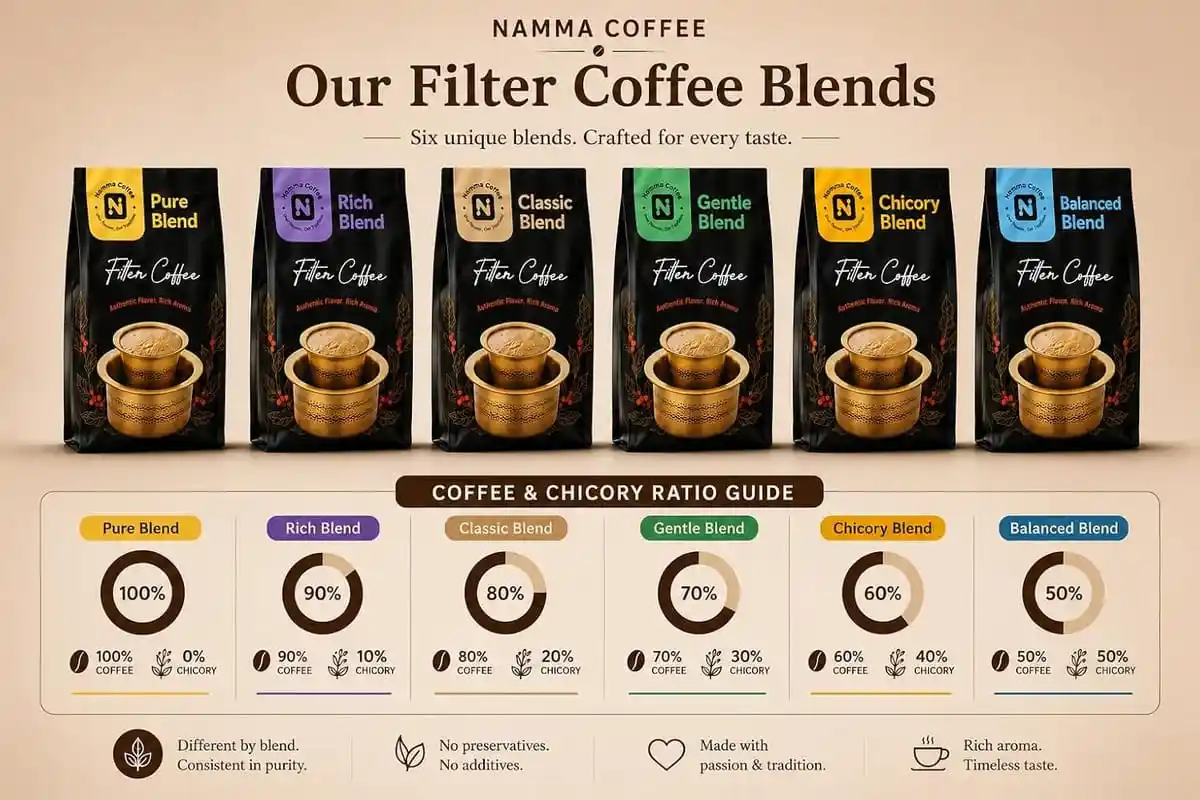
| Blend | Coffee : Chicory | Best if you like |
|---|---|---|
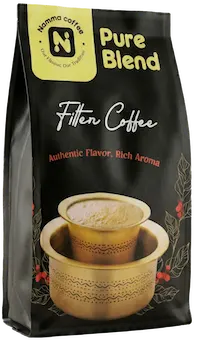
| Pure Blend | 100 : 0 | Bold coffee with no chicory |
| Rich Blend | 90 : 10 | A strong cup with a touch of body |
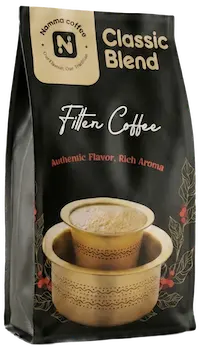
| Classic Blend | 80 : 20 | The classic South Indian taste |
| Gentle Blend | 70 : 30 | A smoother, lighter cup |
| Chicory Blend | 60 : 40 | A deep colour and traditional taste |
| Balanced Blend | 50 : 50 | A mild, easy everyday cup |
Switching from instant coffee? Start with the Classic Blend, or use our guide to choosing filter coffee powder. It's the taste most people know as South Indian filter coffee.
Frequently asked questions
Is filter coffee better than instant coffee?
For taste and aroma, yes. Filter coffee is brewed fresh from ground coffee, so it's richer and more aromatic. Instant coffee is faster and more convenient.
Does filter coffee have more caffeine than instant coffee?
Usually, yes, per cup. Blends with more chicory have less caffeine, because chicory has none.
Can I use filter coffee powder like instant coffee?
No. Filter coffee powder doesn't dissolve. It has to be brewed in a filter, a French press, or a sieve lined with muslin cloth.
Is instant coffee real coffee?
Yes. It's real coffee that's been brewed and dried. Some instant products in India are coffee-chicory mixtures, and 3-in-1 premixes also contain sugar and milk solids.
Ready to switch? Try the Classic Blend (80:20), or go for the Pure Blend if you want 100% coffee with no chicory.